Established 1925 North Plainfield, New JerseyLet’s talk about your rug 908 756-7811

02 / Fringe, binding & repair

Respect the weave.
Care for the edges.

Thoughtful repair begins with understanding how the rug is made—and what the worn area is telling us.

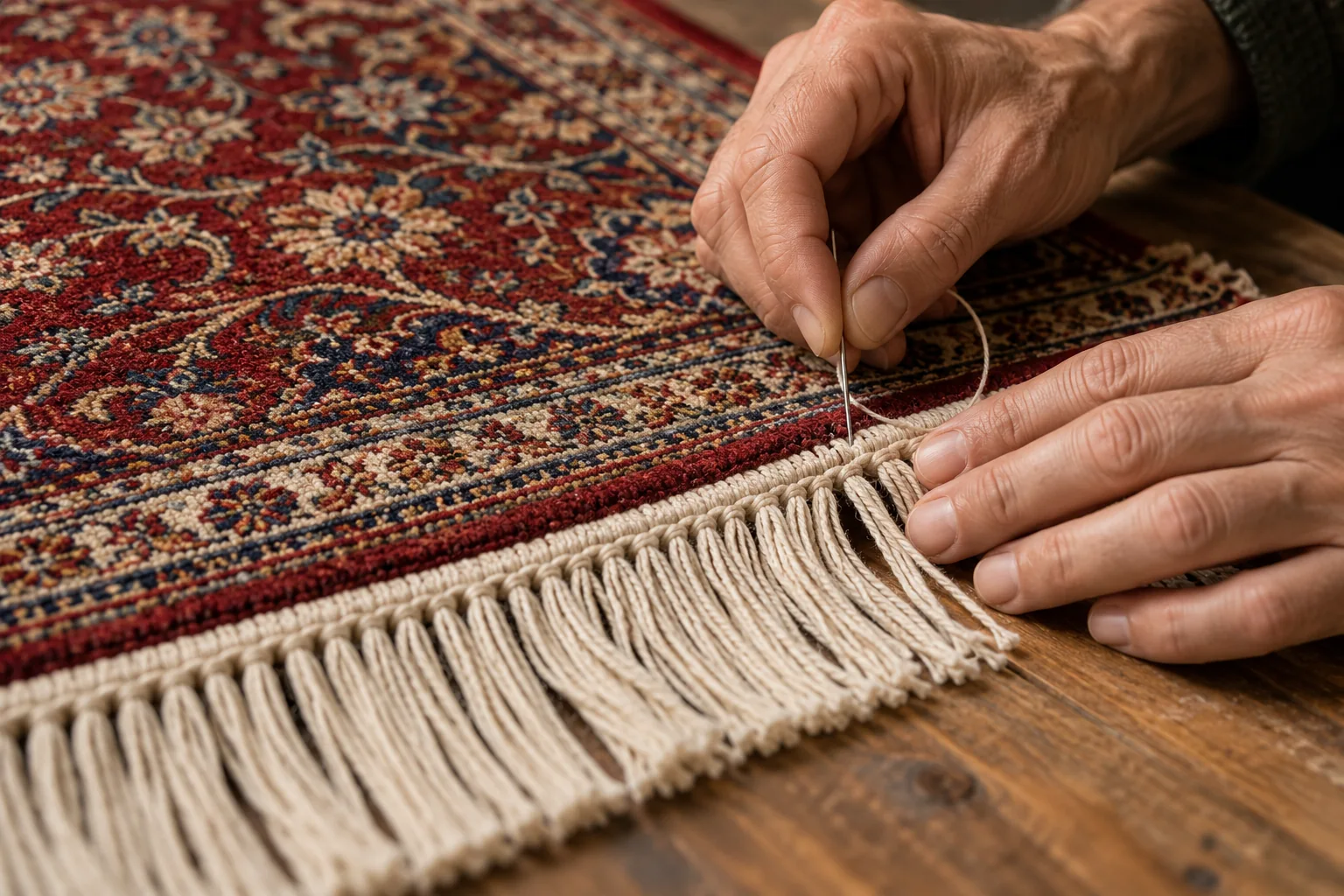
Illustrative close view of hands working carefully on an Oriental rug fringe
Illustrative craft study · fringe repair

Where small details matter

A loose thread
deserves a closer look.

The border may draw the eye. The edge helps hold the story together.

Fringe and side edges experience a different kind of wear from the central pile. An opening, worn binding or damaged end can call for a different response depending on the rug’s construction and condition.

At Aziz Hamrah, fringe replacement and edge binding are part of the care we offer. We discuss the area of concern and the kind of work suited to it before you decide how to proceed.

Call about a repair
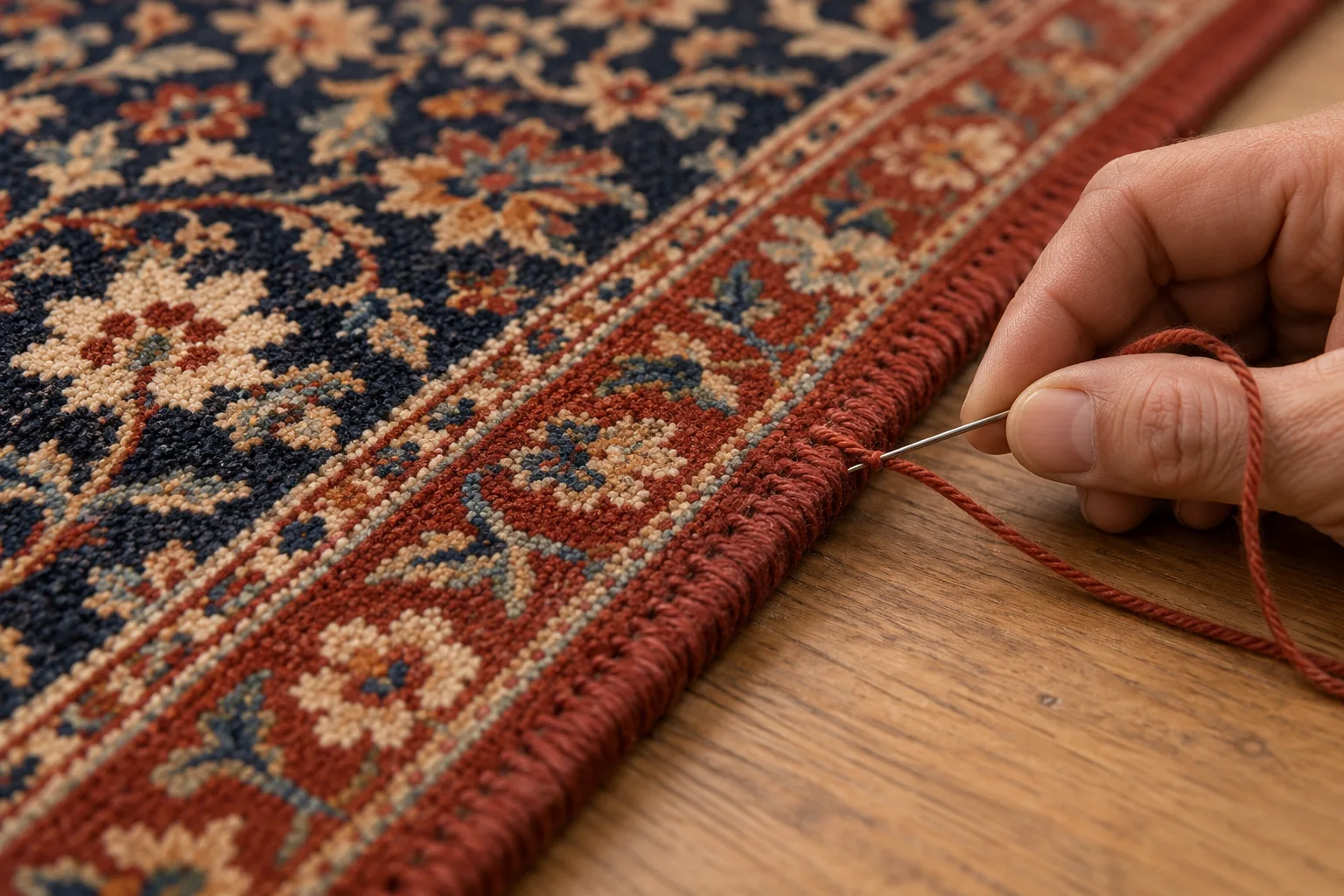
Illustrative detail of binding along the side edge of a fine patterned rug
Illustrative craft study · edge binding

The repair conversation

Different parts.
Different considerations.

01 / The ends

Fringe care
& replacement

Fringe may be a continuation of the foundation threads or an applied finish; the distinction matters. Frayed, tangled or missing fringe should be considered in relation to the structure beneath it.

Tell us whether the fringe is merely untidy or whether the end of the rug itself is opening. Avoid cutting loose threads before the area can be discussed.

02 / The sides

Edge binding
& finishing

A side edge is a small part of a rug with an important role. Wear there may appear as an exposed cord, loosened wrapping or a separation along the side.

The finish should be considered alongside the rug’s existing materials, thickness and appearance. Bring attention to the length of the affected area, not only the most visible spot.

03 / The whole textile

Condition
& expectations

Older repairs, brittle areas, missing pile and changes in colour may influence what is practical. The aim and extent of any proposed work should be clear before it begins.

Repair does not make an old textile new. It is a considered decision about its condition, use and continuing life.

A closer look

The anatomy
of a rug.

Select a detail to understand what you are looking at. This is a simplified diagram; construction varies.

Construction reference: WoolSafe, Rug Inspection.

Explore rug traditions

01 / Fringe

The threads at the rug’s ends. In many hand-knotted rugs these continue from the foundation; other rugs may have applied fringe.

02 / Side edge

The long sides of the rug, finished according to its construction. Loose wrapping or an opening here is worth bringing to our attention.

03 / Pile

The raised textile surface of a pile rug. Flatweaves such as kilims have a different structure and no knotted pile.

04 / Pad

A separate support beneath the rug. It is fitted to the individual rug and selected with the floor and intended use in mind.

Repair questions

A thoughtful
next step.

Should I trim a loose fringe?

Call before cutting or pulling a loose thread. What looks like a stray end may be connected to the rug’s structure. Avoid vacuuming across the affected area.

Will a repair be invisible?

That depends on the rug, the damage and the work involved. Colour, texture and age can affect the result. The intended appearance and limits should be discussed rather than assumed.

Can cleaning and repair be considered together?

Yes. Mention both when you call so the condition of the rug can inform the conversation about cleaning, repair and sequence of work.

The next chapter

A detail today.
A rug for tomorrow.

Tell us about your rug, the way you live with it, and the care you have in mind.

Call 908 756-7811

Visit the store

527 Somerset Street
North Plainfield, NJ 07060
Get directions

Please call for current hours and before bringing a rug.