 View museum record
Persia 1600–1625
A royal language of flowers
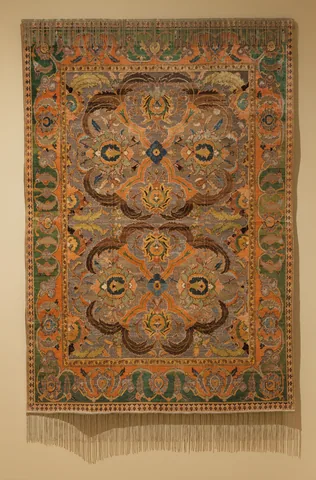
Royal Carpet with Silk and Metal Thread, 1600–1625. Isfahan, Iran; Safavid period.
Cleveland Museum of Art · CC0The rug journal
Patterns, places and the structures beneath the surface. A small introduction to a world worth knowing.
A textile is a record of choices
A field of flowers.
A rhythm of geometry.
A story in every thread.
Fine rugs reward attention. The proportions of a border, a repeated motif, the density of a surface and the way a fringe begins each reveal something about how the textile was made.
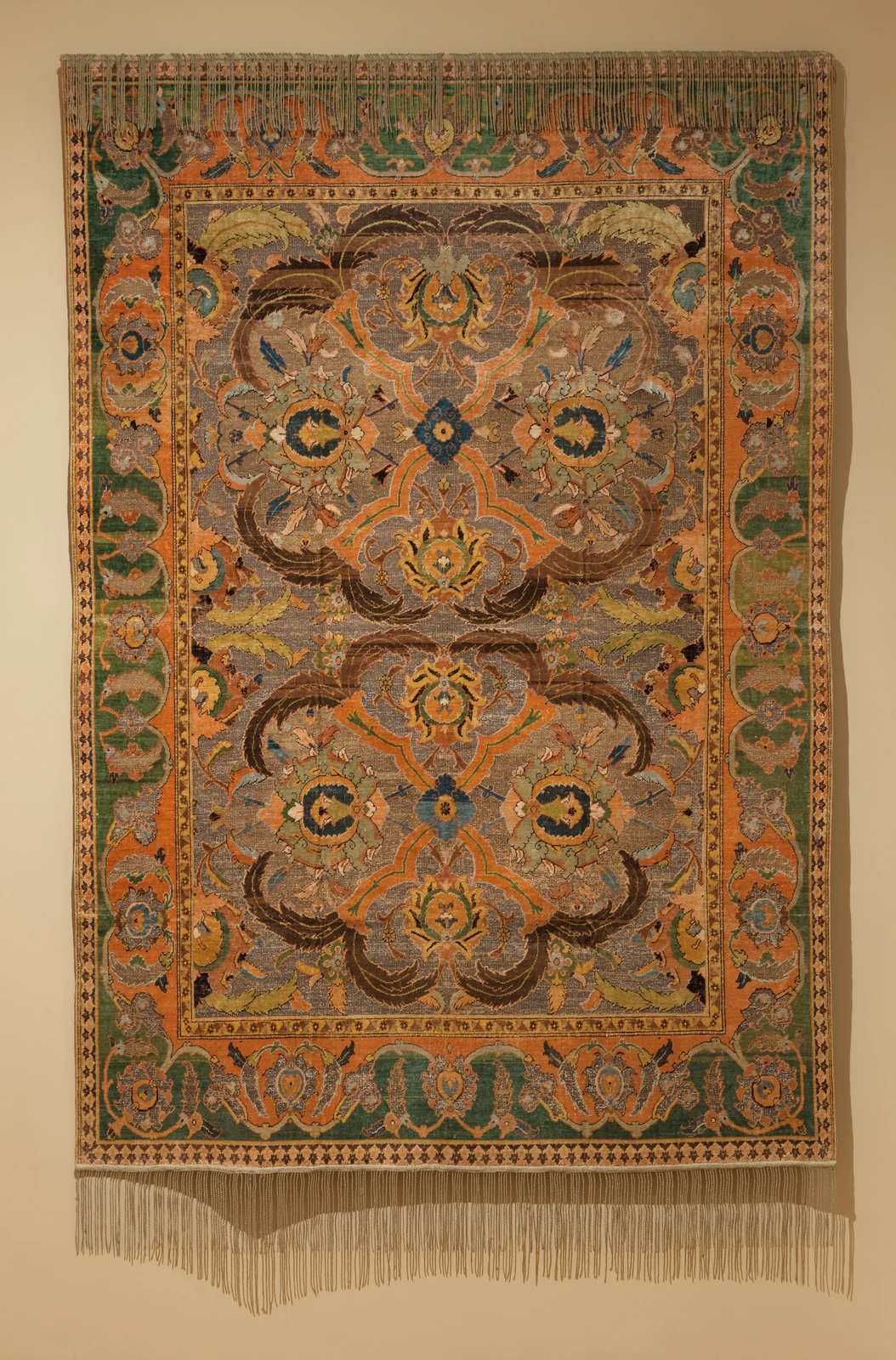
Persian silk carpet, Isfahan, 1600–1625
Cleveland Museum of Art · CC0
The woven collection
Historic rugs from the Cleveland Museum of Art, reproduced from its open collection. Explore the object records for full catalog information.
Showing all six objects.
View museum record Persia 1600–1625
Royal Carpet with Silk and Metal Thread, 1600–1625. Isfahan, Iran; Safavid period.
Cleveland Museum of Art · CC0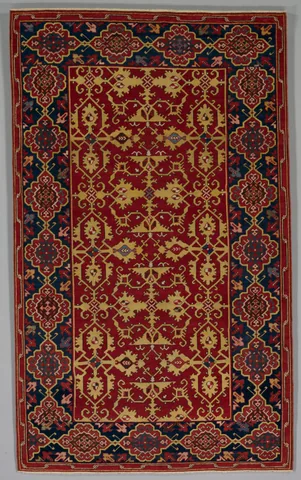 View museum record
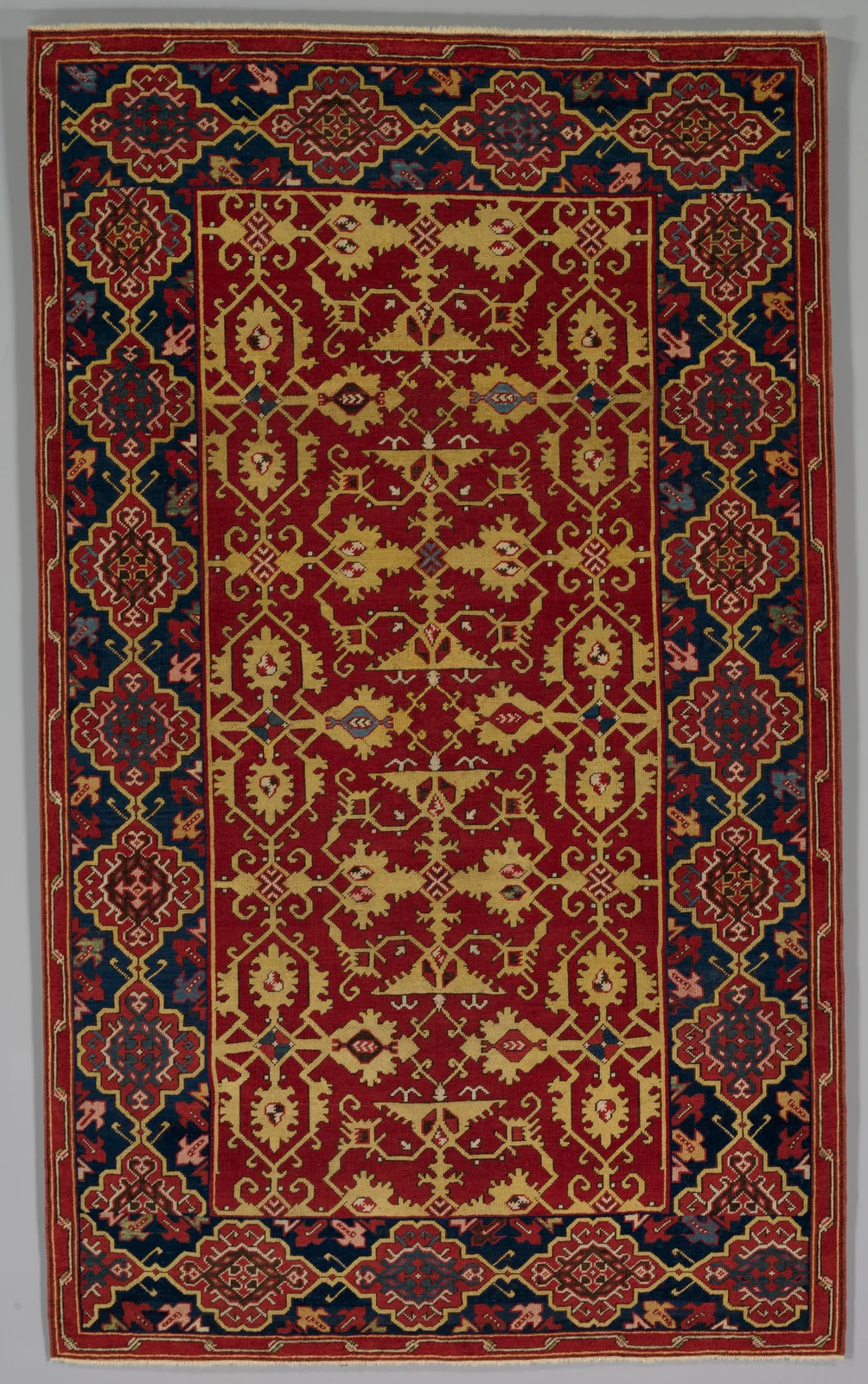
Anatolia 1600–1650
Classical Turkish Carpet with the Lotto Pattern, 1600–1650. Ushak, Turkey; Ottoman period.
Cleveland Museum of Art · CC0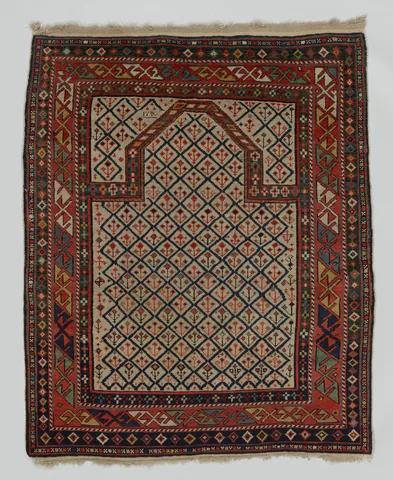 View museum record
The Caucasus c. 1800s
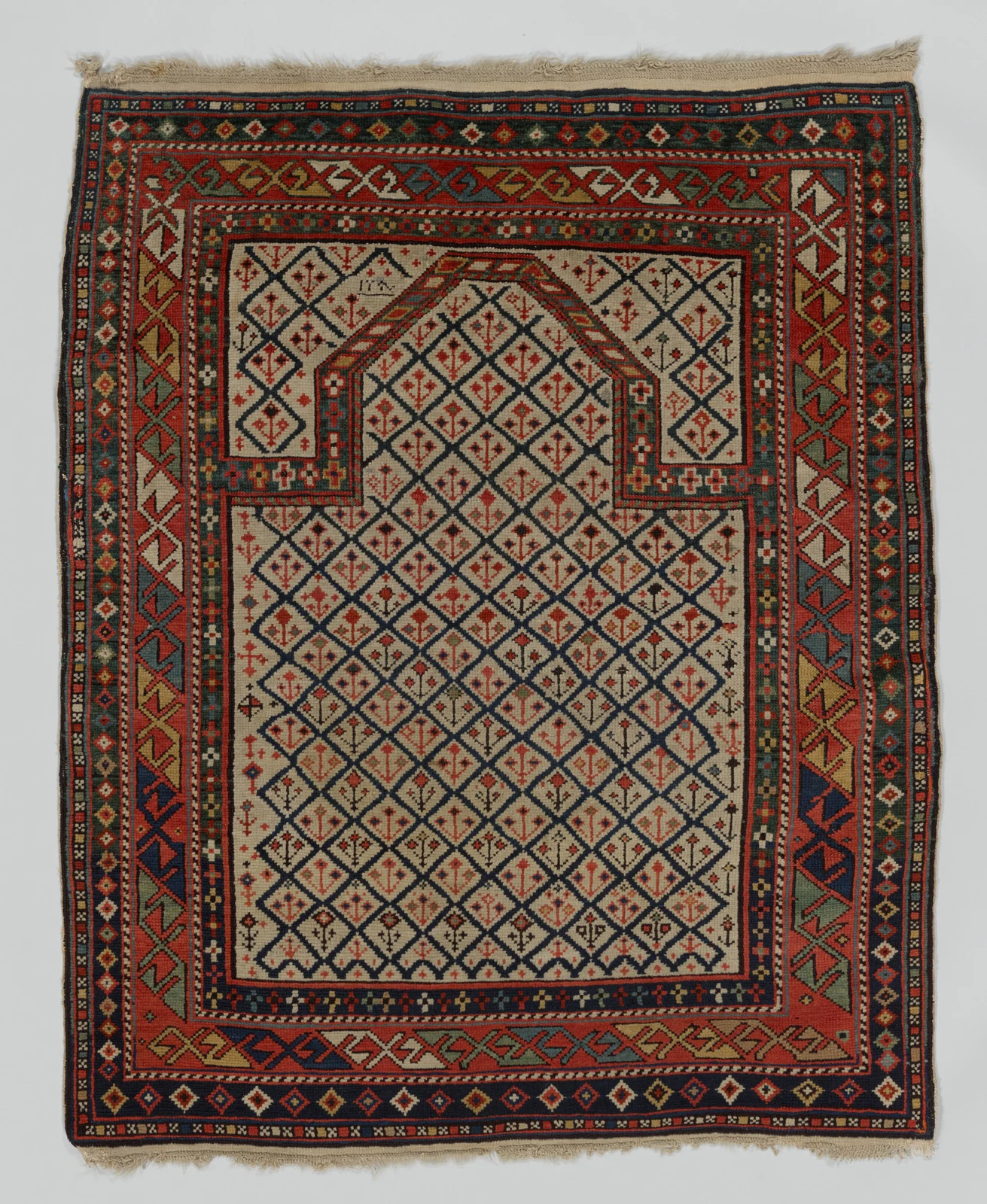
Prayer Rug, c. 1800s. Daghestan, Caucasus.
Cleveland Museum of Art · CC0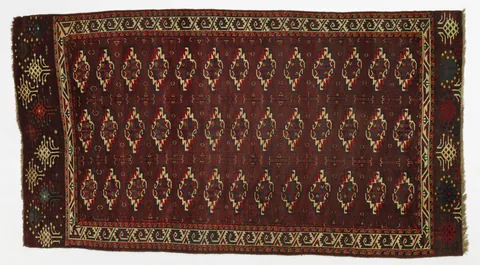 View museum record
Central Asia mid-1850s
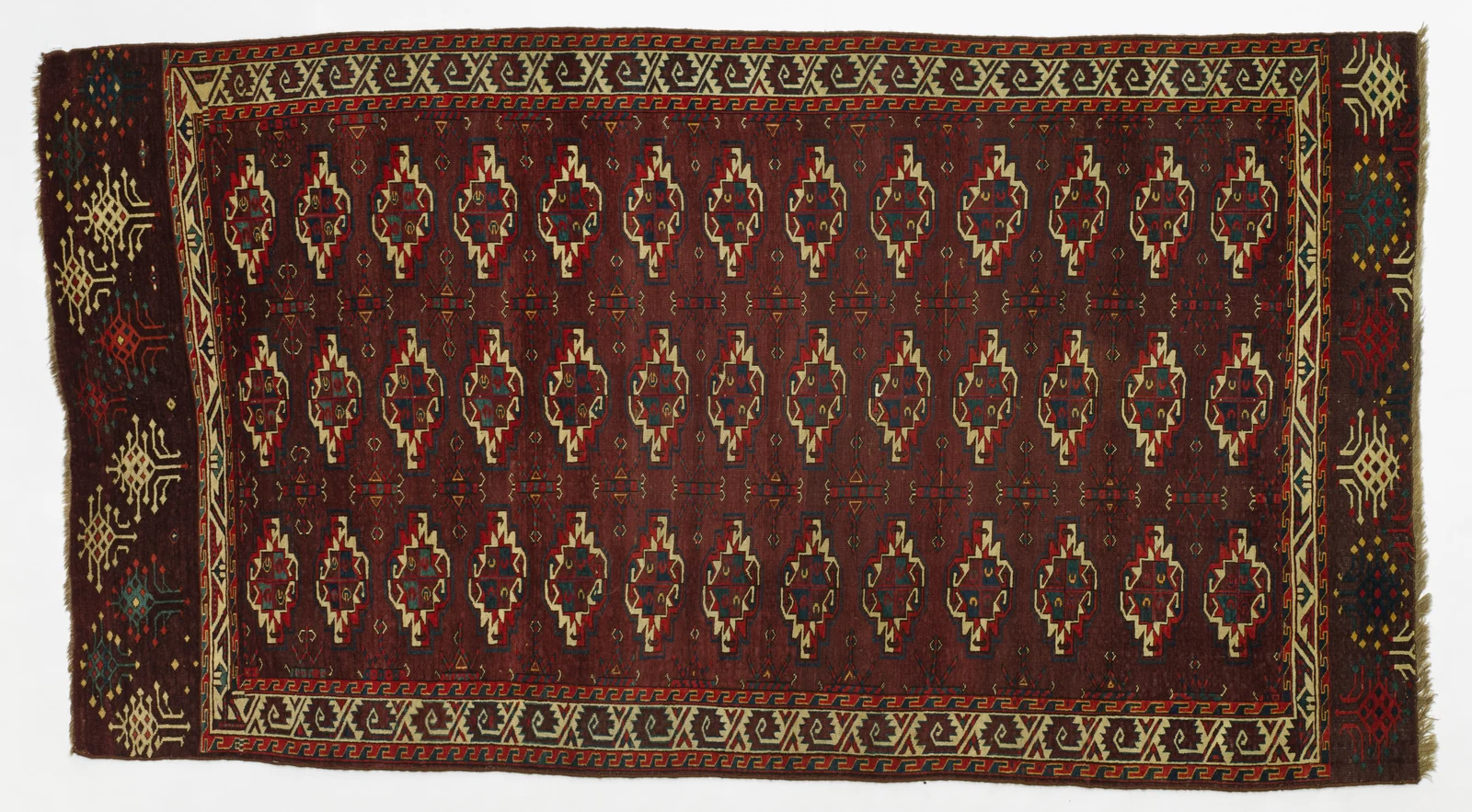
Turkmen Main Carpet, mid-1850s. Turkmenistan; Yomud.
Cleveland Museum of Art · CC0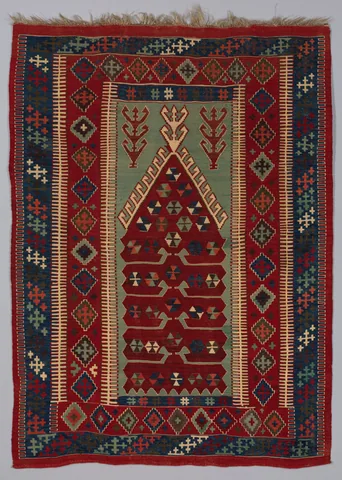 View museum record
Anatolia late 19th-early 20th century
Carpet (Kilim), late 19th-early 20th century. Anatolia, Turkey.
Cleveland Museum of Art · CC0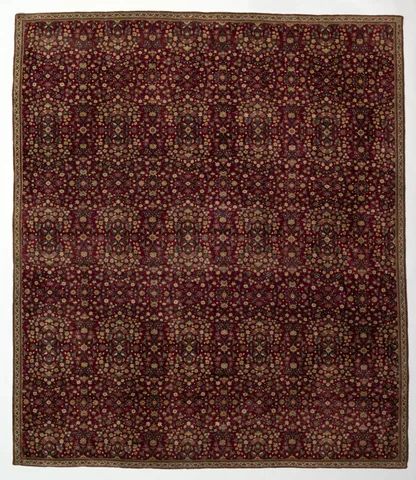 View museum record
Kashmir early 1600s
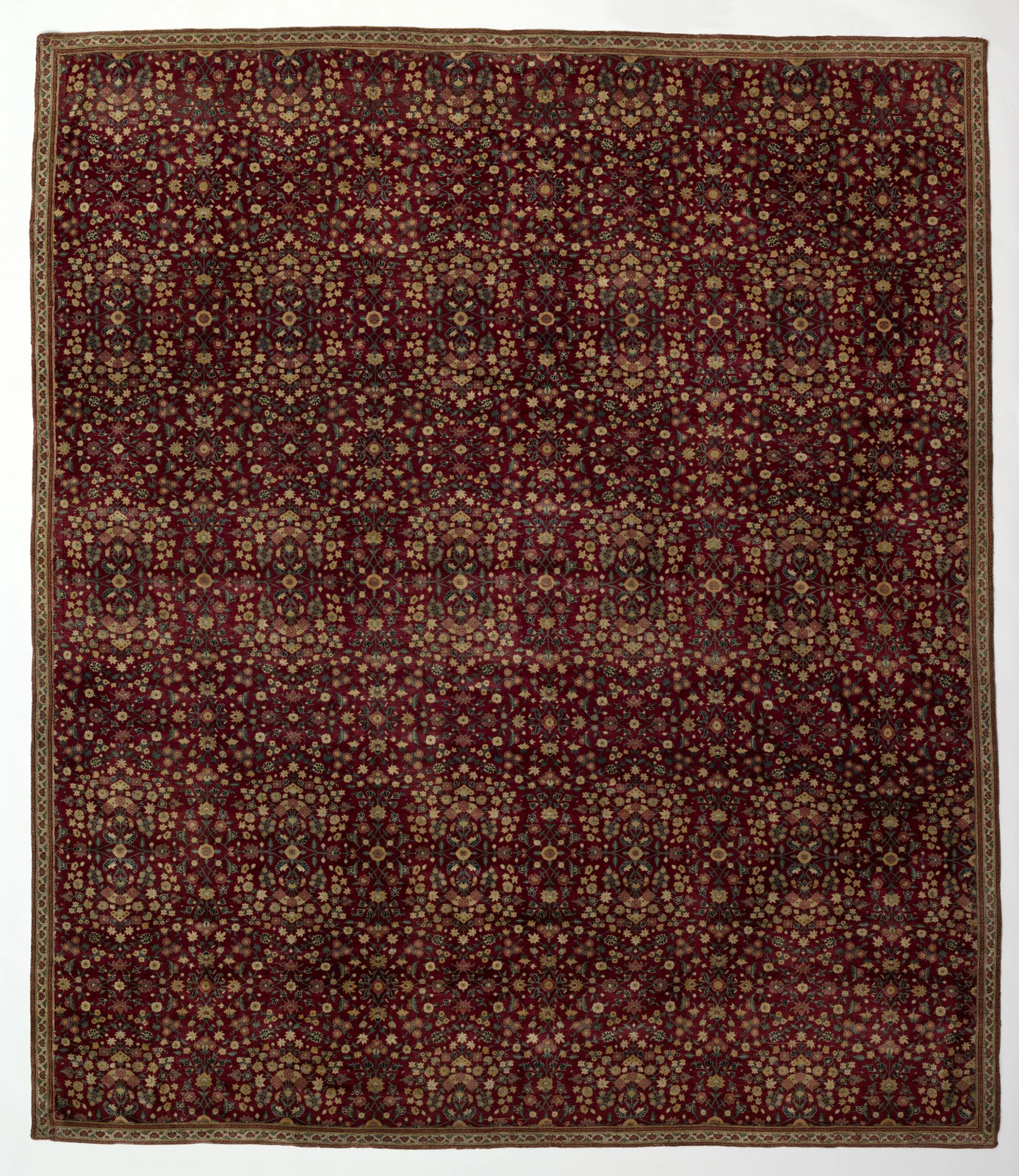
Woolen carpet with millefleurs decoration, early 1600s. Kashmir, India.
Cleveland Museum of Art · CC0These are historical museum objects, not rugs offered for sale or examples of work performed by Aziz Hamrah.
Traditions behind the pattern
A closer introduction to six weaving traditions, and to the ideas that moved between them.
01 / Persia · Safavid Iran
Iranian makers wove knotted-pile carpets long before the Safavid period. During the 16th century, ambitious designs expanded the possibilities of the woven field: central medallions, curling vines, blossoms and animals could become parts of an intricate whole.
The Ardabil Carpet, dated by its inscription to 1539–40, offers a remarkable example. Its great medallion and floral scrollwork reward both a distant view and close attention. In the following century, luxurious silk carpets incorporating metal thread furnished royal settings and travelled abroad as exports and diplomatic gifts. A rug could be useful, beautiful and politically significant at once.
Read more: The Met, Carpets for Kings · V&A, The Ardabil Carpet
02 / Anatolia · Ottoman Turkey
Anatolian carpets are associated with compelling geometric designs and stylized forms. During the early 16th century, Ottoman contact with artistic traditions in Persia and Egypt encouraged other approaches, including central medallions and flowing vegetation. Court designs travelled to weaving centres such as Ushak, alongside continuing regional traditions.
The red-and-yellow “Lotto” carpet offers another kind of rhythm. Its later name comes from the Venetian painter Lorenzo Lotto, whose paintings recorded Europeans displaying these Turkish carpets. Notice how the leaf-like forms repeat across the field, while a dark border holds the composition together. Pattern, trade and changing settings all belong to its story.
Read more: The Met, Ottoman carpet traditions · Cleveland Museum of Art, Lotto carpet
03 / The Caucasus
A 17th-century Caucasian Dragon Carpet at The Met shows how an image can become a powerful pattern. Its highly stylized dragons help carry the eye through an angular, richly structured field. Other Caucasian carpets translate flowers and trees into a similarly emphatic visual language.
These textiles come from a region shaped by many communities and traditions. Precise cultural and workshop attributions can therefore be difficult. The Daghestan prayer rug shown here is a separate, later object: look at its stepped arch, small lattice and layered borders. A regional name gives us a starting point; the individual weaving deserves its own careful attention.
Read more: The Met, Dragon Carpet · The Met, Caucasian carpet · Cleveland Museum of Art, Prayer Rug
04 / Central Asia · Turkmen weaving
For Turkmen communities, woven furnishings helped shape everyday domestic space. Carpets covered floors and doorways; patterned bags held household goods; textiles also decorated tents and animals. Women were central to the making and transmission of these traditions.
The largest floor pieces are often called main carpets. Repeated motifs known as guls give many of them a measured rhythm, with forms associated with different weaving groups. This Yomud example carries its guls across a rich aubergine field, ending in decorated panels called elem. The museum places this kind of carpet within the living quarters of a round tent, or yurt: a portable space of remarkable refinement.
Read more: The Met, Turkmen traditions · Cleveland Museum of Art, Turkmen Main Carpet
05 / Kashmir · The Mughal world
The carpet shown here was knotted in pashmina, a fine goat fibre valued at the Mughal courts. The French term millefleurs, or “thousand flowers,” describes its densely repeating floral design. The museum dates this example to the early 1600s.
Such luxurious textiles helped furnish palatial and ceremonial spaces, adding warmth while framing the people and events within them. Look at the tension between abundance and order: the field is full of small flowers, yet its symmetry and enclosing border keep the composition calm. A close view reveals the individual forms; a step back turns them into a garden-like surface.
Read more: Cleveland Museum of Art, Woolen carpet with millefleurs decoration
06 / China · Ningxia and the Qing court
Chinese carpet traditions bring another perspective to this history. According to The Met, Ningxia carpets attracted the Kangxi emperor’s attention during a western journey in 1696–97. Early in the Qing dynasty, carpets from the region were ordered for palace audience halls.
A later Chinese carpet in the museum, dated to the late 18th–19th century, combines curved and angular dragon forms. Compare those with the stylized creatures of a Caucasian Dragon Carpet. The shared English name invites us to look; it does not mean the designs carried the same purpose or meaning. Context makes the comparison more interesting.
Read more: The Met, Ningxia carpet
A vocabulary for looking
The field is the main area of a rug’s design. Borders frame it, sometimes with several narrow guard stripes around a larger band. Watch how the pattern meets a corner: it can be a particularly revealing detail.
A central medallion gives the eye a focal point. An all-over repeat creates a different rhythm. Neither is a measure of quality by itself, and a motif alone cannot establish a rug’s origin or age.
A pile rug has a raised surface. A flatweave expresses its pattern through the interlacing structure without a knotted pile. The Anatolian kilim in this collection invites a useful comparison.
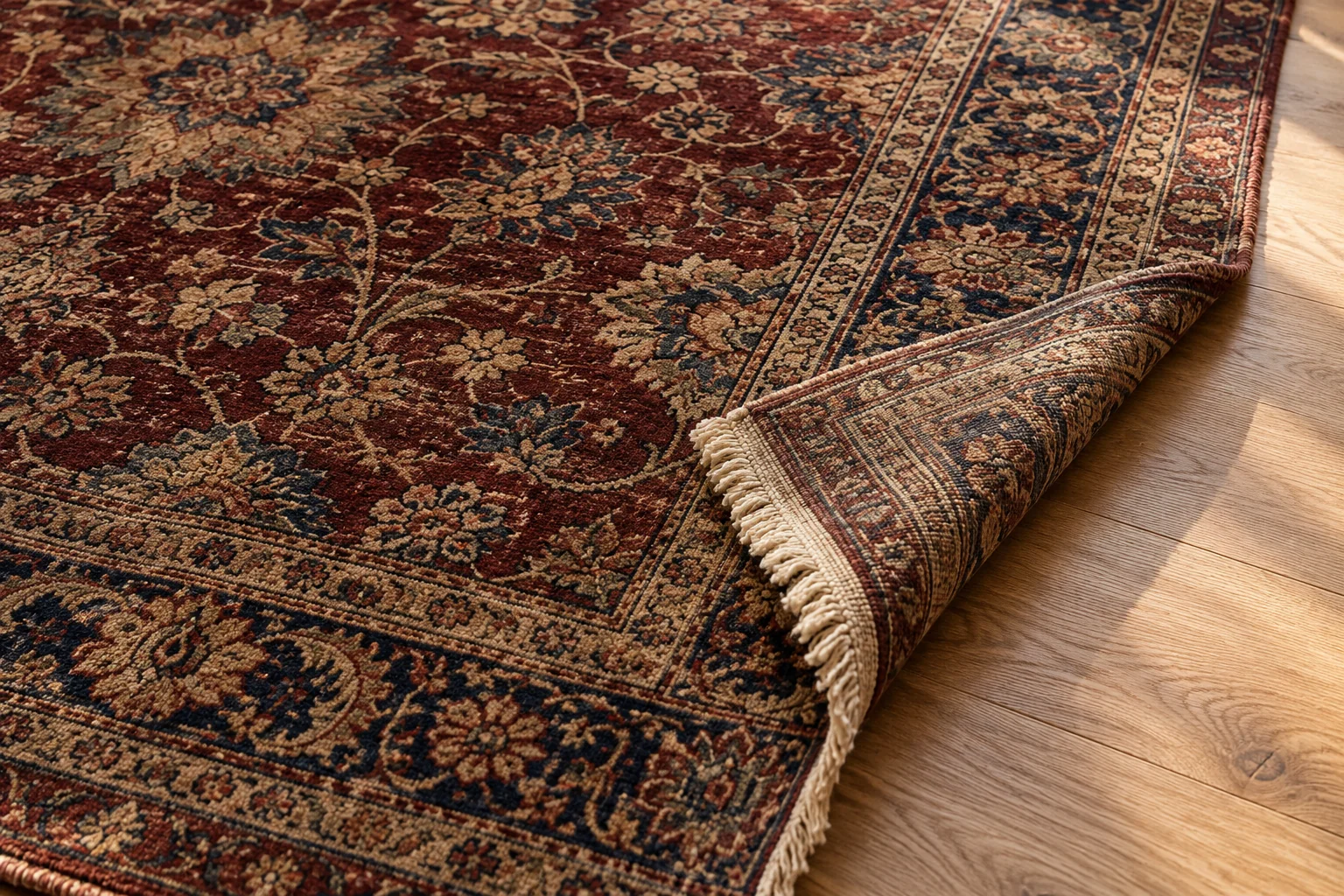
The back of a rug and its ends offer clues about construction that may be less apparent from the front. Notice how the pattern reads on the reverse and where the fringe begins, without pulling or disturbing loose areas.
Living with a fine rug
You do not need to know a rug’s exact origin to notice changes in it. A loose edge, a worn fold, a new stain or an area of fading are all useful observations.
Keep any labels, purchase records and information about earlier cleaning or repairs. A photograph of the rug in good condition can also be a helpful reference when you need to explain a change.
For care questions, start with the specific rug. Broad categories such as “Persian,” “silk” or “antique” are only part of its story.
Explore the care of fine rugsContinue the exploration
Primary collection records and museum writing behind the historical material on this website.
The next chapter
Tell us about your rug, the way you live with it, and the care you have in mind.
Call 908 756-7811Visit the store
527 Somerset StreetPlease call for current hours and before bringing a rug.